
The Albertine Rift is a chain of ancient lakes, volcanic highlands, sunken forests, and equatorial rainforest that runs along the western edge of Uganda and holds a disproportionate share of the world’s remaining great apes.
This journey follows that corridor from north to south, connecting three of its most remarkable primate ecosystems in eleven days. It begins in the chimpanzee forests of Kibale, where the density of primates in a single tract of forest is without parallel anywhere in Africa. It moves through the Queen Elizabeth Conservation Area, where a population of chimpanzees lives in a gorge with rainforest invisible from the surrounding savannah, 100 metres below the grasslands above. And it ends at the foot of the Virunga volcanoes, where the only gorilla family in Mgahinga National Park makes its home in the bamboo zone beneath three extinct peaks that mark the borders of three countries.
With domestic charter flights, expert logistics, trusted naturalists, and curated wilderness camps and lodges, this journey is crafted to offer the perfect blend of chimpanzee forest, rift valley savannah, and mountain gorilla highlands, designed for primate enthusiasts and first-time Uganda visitors who want an immersive, unhurried journey through the Albertine Rift, with confidence that every step is taken care of.
Day 1 | Arrival
Karibu Entebbe, you will be warmly welcomed by our representative who will transfer you to Entebbe Forest Lodge in Uganda’s relaxed lakeside gateway on the shores of Lake Victoria.
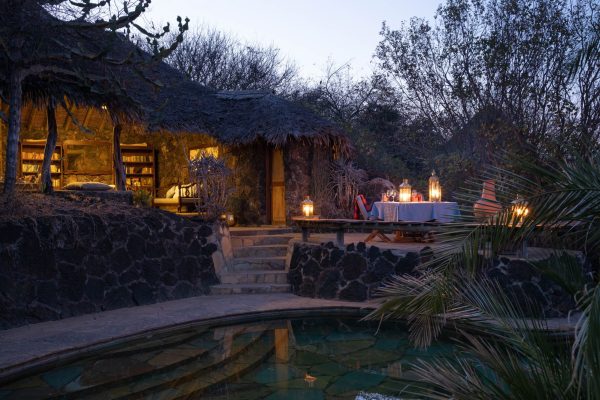
Your first night is spent at an 8-cabin forest lodge on the peninsular within tropical gardens and forest alive with birdsong. The lodge combines modern architecture with warm natural textures and open-air spaces and a swimming pool where you get fresh air and a natural, scenic vibe. The atmosphere here feels private, calm, and restorative after a long international journey.
Days 2–4 | The Primate Capital of the World
The morning charter flight west crosses Lake Victoria and then reveals aerial views of the savannah and crater lakes and, as the aircraft descends toward Kasese.
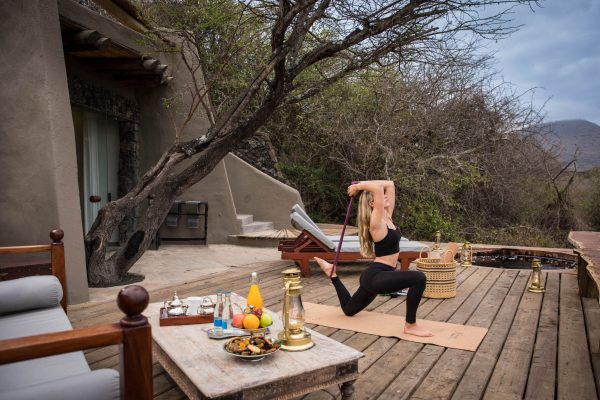
Your guide meets you at the airstrip and the drive to Kibale Lodge winds through rolling green tea farmland around Fort Portal, past homesteads and small trading centres. Kibale Lodge sits on a ridge above the forest, and the view stretches across the snow-capped peaks of the Rwenzori Mountains to the west, the broad plains of Queen Elizabeth and the Kazinga Channel to the south, and below, the dense canopy of Kibale Forest. The lodge opened in July 2024 and was hand-built entirely by an in-house team of African artisans. The eight bandas of which four deluxe and four standard, are set across 150 acres of land planted with more than 200,000 indigenous seedlings by the lodge’s botanist and her team of 50 gardeners. Volcanic stone, woven textures, expansive glass, wide terraces, the building materials are drawn from the land and the design keeps it natural friendly. The spa has two double treatment rooms, a sauna, and a swimming pool, and all massages are complimentary. Butler service, all-inclusive premium drinks, and locally inspired menus that draw on the food traditions of the Batoro people including Filinda, a ceremonial delicacy traditionally served at Batoro marriage celebrations.
The evening before the first chimpanzee trek, a primatologist from the Kibale Chimpanzee Project joins guests for a fireside conversation, covering the research being done within the forest, the social lives of individual chimpanzee communities, and what it means to spend years working in proximity to our closest living relatives. Such a talk changes the way you walk into the forest the following morning.
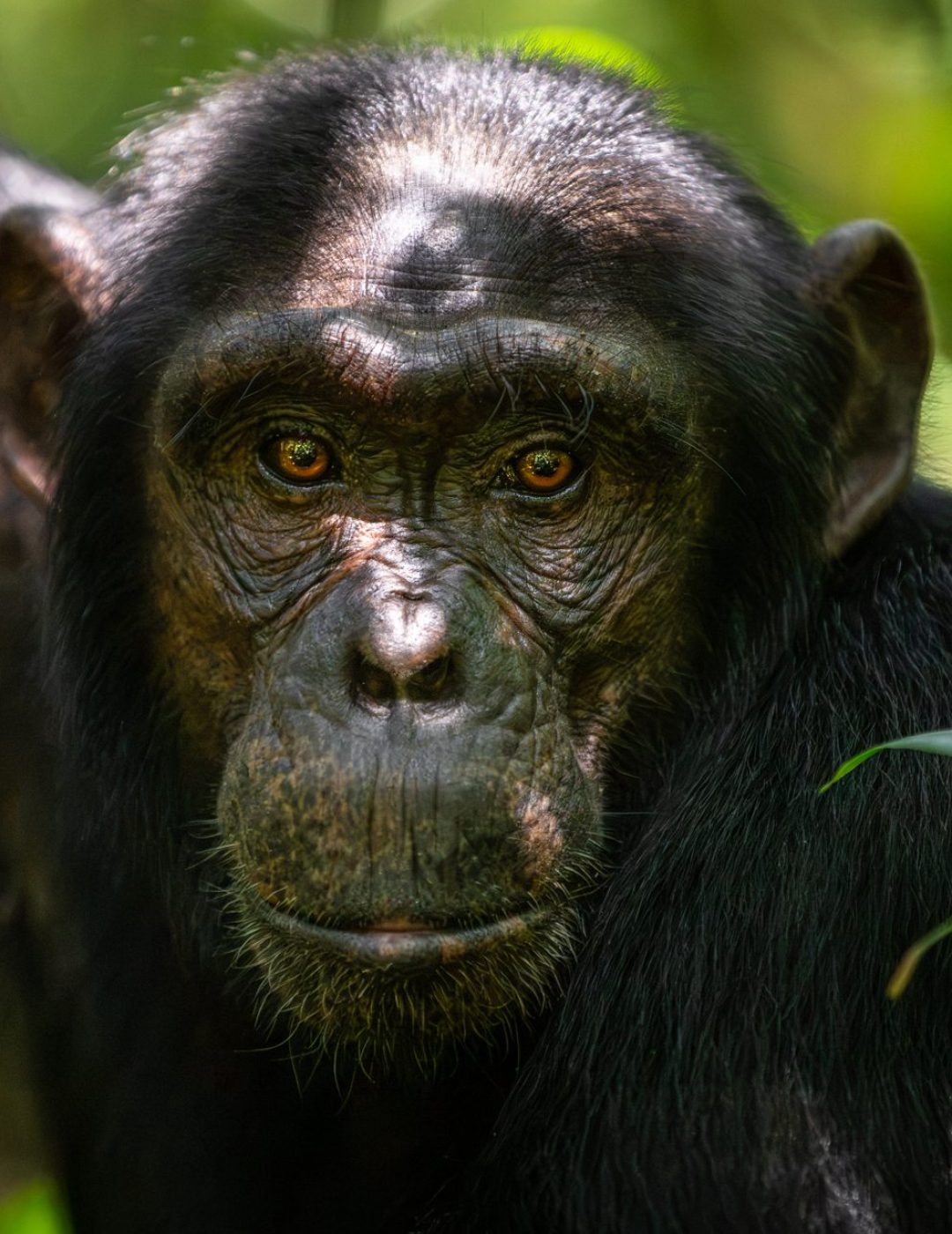
Kibale National Park is known as the primate capital of the world. It protects the largest concentration of chimpanzees in East Africa with approximately 1,500 individuals across the park alongside 12 other primate species. Chimpanzee trekking takes you into this forest of mahogany, ironwood, and fig trees, tangled lianas, forest clearings with experienced guides, following the pant-hoots and movement of habituated families through the canopy. For guests who want something deeper, the Chimpanzee Habituation Experience offers four hours alongside a research group moving with them through the forest as they wake, feed, socialise, and navigate their day, observed by the same researchers who have tracked these communities for years.
Beyond the chimps, guided walks in the Bigodi Wetland Sanctuary reward you with sightings of red colobus monkeys, sitatunga antelope, and the Great Blue Turaco moving through a reserve managed by and for the surrounding community. A visit to the Rwenzori Sculpture Gallery, a gallery of bronze sculptures inspired by the traditional clan totems of Uganda, cast in a working foundry beside the forest introduces you to a unique cultural dimension.
Days 5–7 | The Hidden Forest and the Open Plains
The drive from Kibale to Kyambura Gorge Lodge takes guests through the heart of Queen Elizabeth Conservation Area.
Kyambura Gorge Lodge began as a coffee processing facility and has become one of the lodges. Eight individually handcrafted bandas, four facing the open savannah and four facing the gorge, positioned on the rim of the gorge. The Kyambura Gorge is more than 100 metres deep and contains dense rainforest that appears as if someone had cut a trench through the savannah and filled it with jungle. From the lodge, you look down into it. The sounds change between day and night. On mornings when the conditions are right, you hear the chimpanzees before you see them. Each banda is built from local materials with an attention to natural texture and outdoor space that gives the lodge a settled character. A spa, swimming pool, all-inclusive premium drinks, and the kind of personalised butler service that remembers what you ordered yesterday complete the experience.
A footpath leads directly from the lodge down into the gorge taking you from the breakfast table to the forest floor. The chimpanzees here are known as the Lost Chimpanzees of Kyambura, a small isolated community of 30 individuals whose separation from the larger Kibale population gives them deserved attention for conservation. Descending into the gorge is an experience of its own. Experienced trackers lead the way through it all enabling you to see the chimpanzees.
Above ground, the Kasenyi Plains offer an entirely different wildlife experience. Large herds of buffalo, elephant, and Uganda kob move across the grassland, and the predators that follow them including lion and leopard both are regularly encountered on game drives across the open terrain. Guests at Kyambura have the opportunity to join the Lion Monitoring Team, a research programme led by Dr Alexander Braczkowski that has been tracking and documenting individual carnivores across the Conservation Area since 2023. It involves recording GPS positions, taking identification photographs, and checking camera trap footage from the previous night. It is real field science, and guests who participate come away from it with a fundamentally different understanding of what conservation work actually looks like.
The Kyambura Women’s Coffee Cooperative adds another perspective. Twenty women cultivate more than 2,500 coffee plants organically on land that also functions as a wildlife buffer along the gorge edge. The coffee served at the lodge is harvested, processed, and hand-roasted here, by the same women guests can meet during an afternoon session at the cooperative.
A Kazinga Channel boat cruise provides the final perspective of the Queen Elizabeth landscape. This 32-km waterway connecting Lake Edward and Lake George supports one of the highest hippo concentrations in Africa, alongside Nile crocodiles, elephants that wade in from the banks, and the dense congregation of water birds that lines the shores throughout the afternoon. The lodge has its own informal classification for the channel: elephant, hippo, buffalo, crocodile, and African fish eagle, all reliably present, all easily encountered on the afternoon cruise.
Days 8–10 | The Volcanoes
The charter flight from Kasese to Kisoro is the most dramatic of the three transfers this journey involves.
The savannah country around Kasese gives way quickly to the folded highlands of Kigezi terraced hillsides and the Virunga volcanoes appear on the horizon, forming the border between Uganda, Rwanda, and the DR Congo. At Kisoro Airstrip, your guide is waiting and the transfer to Mount Gahinga Lodge along a rough road takes an hour winding through the highlands and banana groves. The lodge sits at the foot of the Virungas, right at the boundary of Mgahinga Gorilla National Park. The design responds directly to this unique location with eight traditional hand-built bandas of which two deluxe, six standard all oriented to face the peaks directly. Volcanic stone construction, warm fireplaces and cozy interiors are genuinely necessary at this altitude to keep you warm. The Gushimisha Spa & Sauna offers treatments including the lodge’s signature Rungu massage. Butler service and all-inclusive premium drinks throughout. Locally inspired cuisine prepared from the produce of the surrounding highlands. The lodge can be booked on exclusive-use basis for guests who want the Nyakagezi gorilla family and all of Mgahinga entirely to themselves.
The evening before the gorilla trek, a researcher from Gorilla Doctors joins guests at the fireside. Gorilla Doctors is the only veterinary organisation in the world dedicated entirely to the care of mountain and eastern lowland gorillas providing emergency medical intervention, health monitoring, and the kind of ongoing proximity to wild gorillas that most people never get close to understanding. The conversation is specific covering what happens when a gorilla becomes ill in the forest, how veterinarians make the decision to intervene, and what the long-term data shows about the health of the Nyakagezi family. By the time the fire burns down, the trek the following morning carries a different weight entirely.
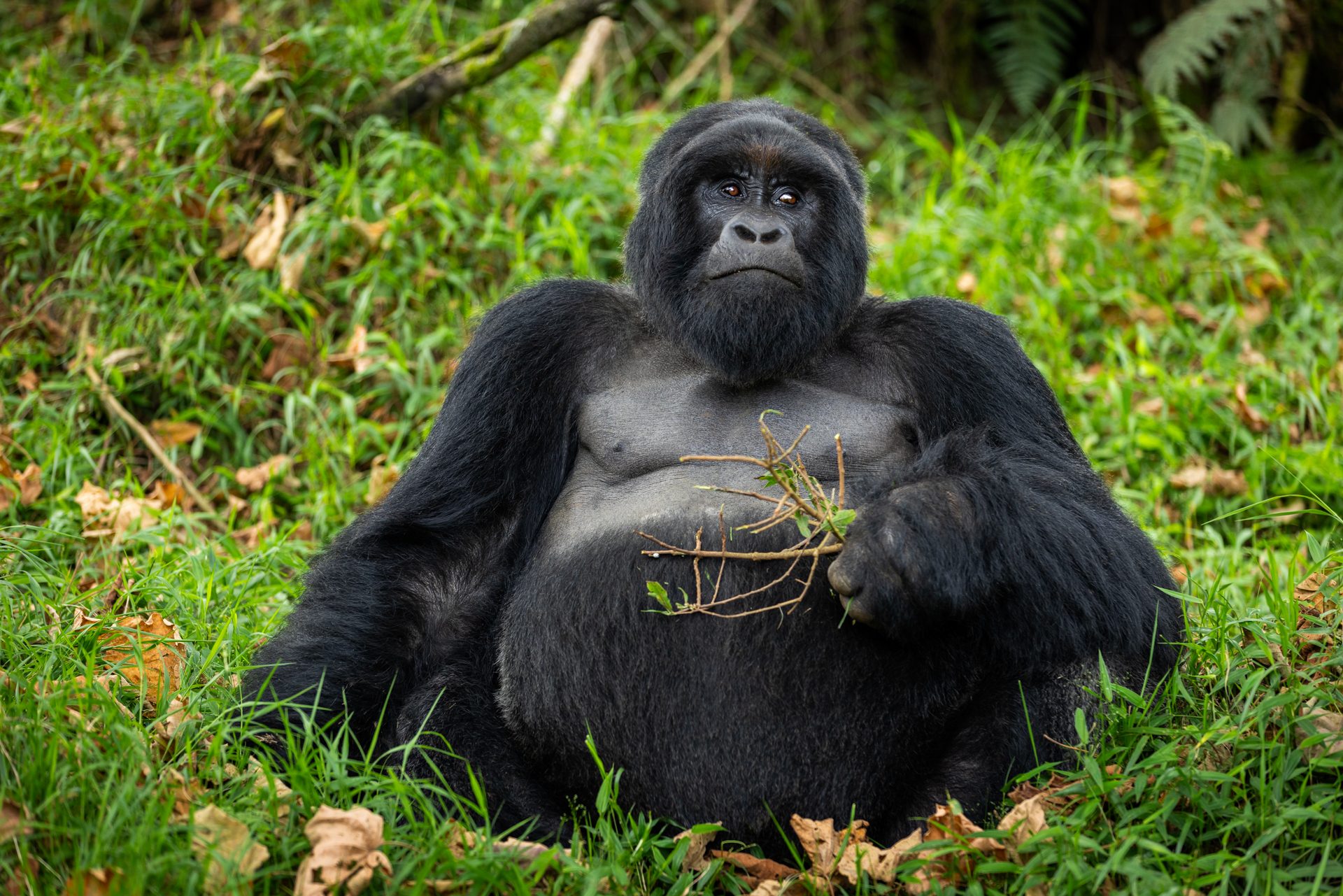
Mgahinga is home to one gorilla family, the Nyakagezi group, and notable within for its multiple silverbacks moving together within the same family. The primates here live primarily within the bamboo zone between 1,800 and 3,300 metres, feeding on shoots, roots, and dense ground vegetation along the volcanic slopes. The trekking terrain is distinctive, cooler, more open in places than Bwindi, shaped by high-altitude mountain air and the particular quality of light that comes through bamboo canopy in the early morning.
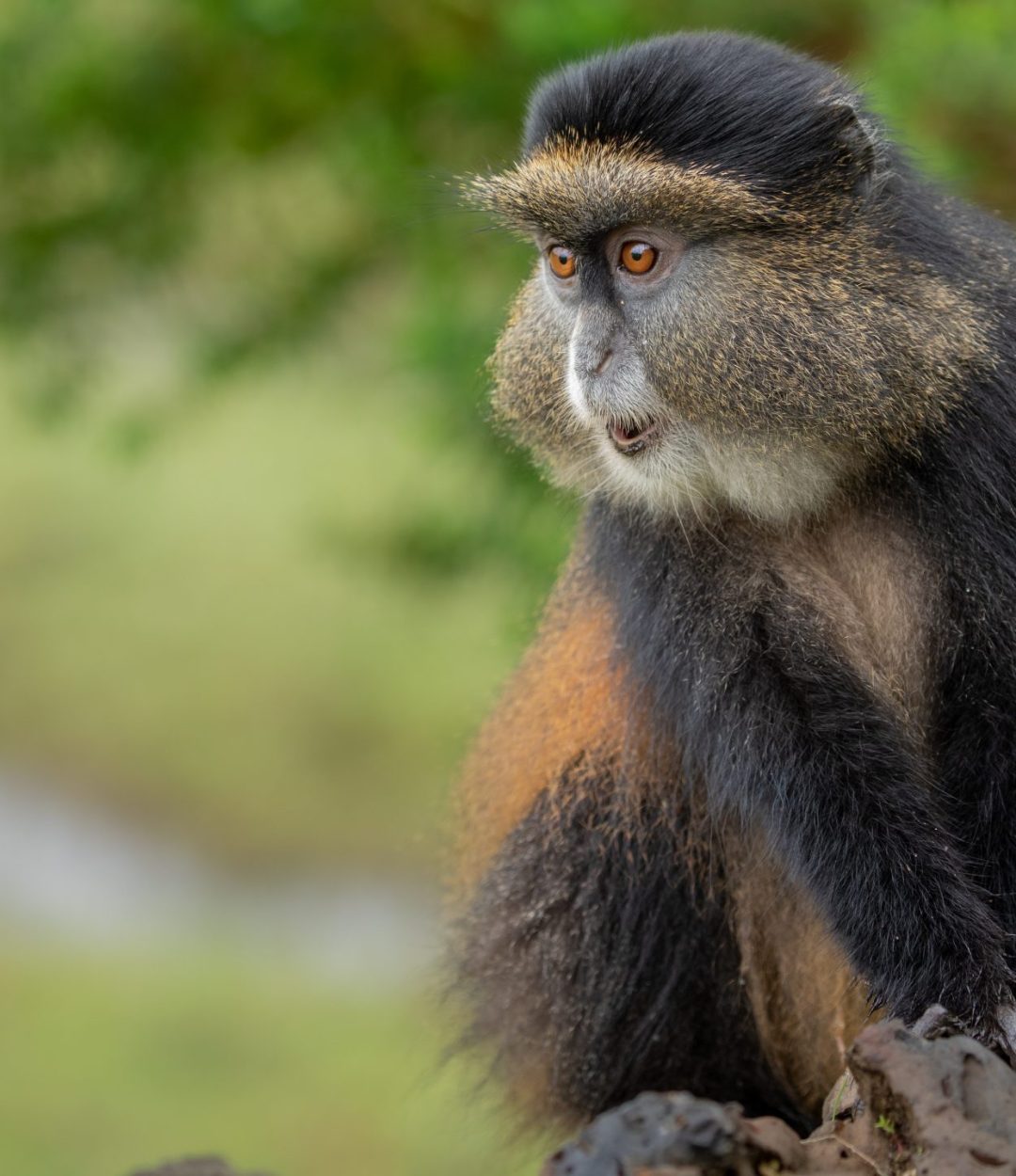
The golden monkeys fill a second morning. Vivid, quick-moving, and deeply social, they inhabit the same bamboo zone as the gorillas and reward patience, the flashes of gold through the undergrowth eventually resolving into a whole group moving through the canopy overhead, feeding and calling with an exuberance that feels almost deliberate.
The final cultural activity of this journey runs through the Gahinga Batwa Village, home to approximately 150 members of the Mgahinga Batwa community, whose presence in these forests predates written history in the region. The village was established in 2018 to provide a permanent settlement for a community that had lived as hunter-gatherers within the forest for generations before its designation as a national park. Batwa elders lead guests through the Batwa Heritage Trail and to the Vocational Centre, sharing fire-making techniques, medicinal plant knowledge, and storytelling. It is not a performance and it should not be received as one.
Day 11 | Return to Entebbe
A final morning in the shadow of the volcanoes. The transfer back to Kisoro Airstrip for the charter flight north reverses the landscape slowly, peaks to highlands, highlands to savannah, savannah to lake. By the time you land at Entebbe, the journey has compressed itself into something smaller and more durable than the sum of its days. The particular silence of the gorge. The moment the silverback turned. The Rwenzori range at dusk from the Kibale ridge. These are the things that tend to stay.
Designed specifically for primate enthusiasts, it offers an immersive, unhurried journey through the Albertine Rift. It perfectly blends chimpanzee forests, rift valley savannahs, and mountain gorilla highlands using seamless domestic charter flights.




Lodges that focus on deep integration with the environment, offering biomimetic, eco-conscious canopy sanctuaries and luxury retreats that respect the natural contours of the land.


This immersive journey traces the dramatic contours of the Albertine Rift, taking you deep into the most species-dense primate corridor on the African continent. From tracking dynamic chimpanzee troops in the ancient mahogany forests of Kibale to spending a sacred, transformative hour with the mountain gorillas of Bwindi Impenetrable Forest, this expedition celebrates East Africa’s extraordinary biodiversity. It is a profound, active exploration of pristine rainforest ecosystems, offering an unmatched connection to our closest living relatives.
BEST TIME TO GO:
June to September & December to February (Drier trails for optimal trekking conditions)
KEY HIGHLIGHTS:
Kibale Chimpanzee Tracking, Bwindi Mountain Gorillas & Scenic Rift Valley Escarpments
PHYSICALITY LEVEL:
Moderate to Active (Requires stamina for high-altitude, dense rainforest hiking on uneven terrain)
INTERNAL TRAVEL:
Scenic domestic charter flights or guided overland exploration through the Rift Valley highlands
SAFARI STYLE:
A deeply moving, active primate expedition focused on deep forest immersion and exceptional eco-luxury lodgings
Our journeys are thoughtfully curated by our guardians to your preferences, to offer a profound connection with natural world, inviting you to slow down. Rather than rushing from one sighting to the next, we encourage you to breathe in the vast landscapes, absorb the subtle rhythms of the bush, and experience the untamed beauty of East Africa on its own terms.
To achieve this level of deep, meaningful personalization, we listen, we learn, we refine & we invest more of ourselves into every journey we tailor.
Every great safari begins with a conversation. We take the time to understand your pace, preferences, and sense of wonder, ensuring your journey reflects your personal vision rather than a standardized template.
Our recommendations are built on continuous exploration. We rely on our firsthand experience and deep-rooted local relationships to intimately understand East Africa’s shifting seasons, hidden landscapes, and authentic cultural encounters.
Exceptional travel depends on hundreds of unseen details. We meticulously coordinate every primate permit, private charter, and lodge transfer, managing the complexities of your expedition so you can simply focus on the wild.
We are committed to flawless on-the-ground execution. Our local team remains quietly present behind the scenes, adapting seamlessly to the dynamic rhythms of the bush to ensure your safari unfolds with absolute precision.
Bespoke East African safaris for travellers seeking rare wildlife encounters, seamless planning and a deeper connection to place
Copyright © 2026 Nyumbu Beyond Journeys | Website Created by DesignBulb Studio
